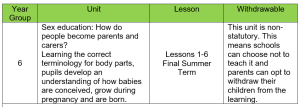
Our RSE & PSHE scheme of work aims to help pupils develop the knowledge, skills and attributes they need to lead confident, healthy and fulfilling lives. The intention is for pupils to understand themselves and others, form positive relationships and make informed choices that support their wellbeing and the wellbeing of those around them.
The scheme encourages pupils to think with empathy, integrity and self-awareness, recognising how their actions and attitudes contribute to their communities. It supports them in developing respect for diversity, managing change and understanding their rights and responsibilities as citizens.
Kapow Primary’s RSE & PSHE curriculum is designed to build a strong foundation for safeguarding, preparing pupils to navigate an increasingly complex world with confidence and care. Lessons promote emotional literacy, resilience and a sense of personal agency, helping pupils to approach life’s challenges with maturity and compassion.
The scheme supports teachers by providing clear guidance, structured progression and engaging resources, enabling them to deliver sensitive topics with confidence. The curriculum is both accessible and ambitious, ensuring all pupils can participate fully and achieve their potential as kind, thoughtful and responsible individuals
For more information about how our curriculum works you can see a breakdown of learning in relationships and sex education by year group here: RSE & PSHE LTP – Basic 2026-2027
Kapow Primary’s RSE & PSHE scheme is built around a spiral curriculum model. The key areas of the curriculum are revisited regularly, ensuring that pupils return to important themes such as relationships, health, safety, online life and growing up throughout their primary education.
The Kapow Primary RSE & PSHE scheme of work is designed to be fully adaptable for pupils with SEND. Every lesson includes an adaptive teaching section, providing clear guidance on how activities can be modified to meet the needs of all learners.
In addition to discrete lessons, RSE & PSHE learning is often reinforced through day-to-day school life. Teachers will naturally revisit and apply their learning in response to real-life situations that arise, such as issues on the playground, in the classroom or during discussions, helping pupils to make meaningful links between taught content and real experiences.
In EYFS & KS1 our lessons are 25 minutes long. In KS 2 they are 50 minutes long.
RSE & PSHE gives pupils regular opportunities to explore different perspectives, reflect on ethical and emotional issues and think about what is right and fair. Pupils collaborate with others, build positive relationships and learn to value and respect people from different backgrounds, families and cultures.
It is important to note that SMSC development does not occur solely through RSE & PSHE but is woven throughout the entire curriculum and the wider life of the school.
The Kapow Primary RSE & PSHE scheme of work is designed to be fully adaptable for pupils with SEND. Every lesson includes an adaptive teaching section, providing clear guidance on how activities can be modified to meet the needs of all learners.
Children learn in a variety of ways. As such, Kapow Primary RSE & PSHE lessons include a range of strategies to support and challenge every pupil, including:
Scaffolding – activities are designed with flexibility in mind, allowing for additional support or challenge where needed.
Multi-sensory approaches – lessons incorporate different elements to engage all learners.
Clear instructions and structured tasks – ensuring clarity and reducing cognitive load for pupils who benefit from additional support.
Opportunities for collaborative and independent learning – allowing pupils to work at their own pace while building confidence and independence.
Use of concrete examples and real-life scenarios –Abstract ideas such as consent, relationships or emotions can be difficult for many pupils to grasp. Using clear, concrete scenarios and examples helps pupils understand what concepts look like in real situations.
Visual supports and symbol-based resources – Dual-coding on our resources helps to support understanding, especially for pupils with communication or processing differences.
Repetition – Revisiting key messages, vocabulary and expectations in different lessons and contexts supports retention and helps pupils feel secure with sensitive content.
Explicit teaching of social and emotional skills – Skills such as recognising emotions, setting boundaries, asking for help or resolving conflict often need to be taught directly rather than assumed.
By embedding adaptive teaching throughout, the scheme ensures that all pupils, regardless of their starting points, can access and succeed in their learning. The step-by-step curriculum design also supports all pupils, particularly those with SEND, by avoiding sudden jumps in complexity at transition points and allowing for steady, manageable progression.
Pupils learn how to form and sustain respectful relationships, recognising the importance of care, trust and communication. They also explore strategies for resolving conflict, understand the impact of bullying and challenge stereotypes.
These lessons help children to appreciate diversity within families and friendships and to value positive, supportive connections with others.
This key area focuses on equipping pupils with strategies to look after their mental and physical health.
Lessons include healthy lifestyles, the importance of sleep, relaxation techniques, sun safety, immunisation and the benefits of balanced nutrition and exercise.
Pupils develop essential knowledge and skills to stay safe in a range of contexts, including at home, online and in the community. They learn basic first aid, safety around medicines, road safety and how to respond to emergencies.
As they grow older, pupils also explore the changes that occur during puberty, preparing them to manage this stage of development with confidence and understanding.
Through this key area, pupils gain an understanding of their rights and responsibilities as members of society. They learn about democracy, human rights, diversity and the importance of community.
Lessons also explore environmental stewardship and encourage pupils to consider how their actions can make a positive impact locally and globally.
Pupils also learn about resilience and how to manage their emotions, laying the foundations for lifelong wellbeing.
Pupils learn how to make informed decisions about money, including spending, saving and budgeting. They explore where money comes from, how to keep it safe and the value of work in its many forms.
As they progress, pupils consider stereotypes around jobs and careers, broadening their understanding of future opportunities and economic responsibility.
In Year 6, pupils reflect more deeply on personal identity and what makes us who we are. They consider body image, self-esteem and the influence of media and culture on how we view ourselves and others.
This unit helps pupils to build confidence, respect diversity, and enter secondary school with a secure sense of self.
A parents guide to understanding the new Relationships and Health Education